
Where to buy fresh press rosin is a fair question, because this is one of the easiest concentrates to get wrong. Fresh press is soft. It’s heat-sensitive. It changes with time and temperature. A jar that sat warm on a shelf for two months is a very different product from one that was pressed, sealed, and chilled within days. So the real answer isn’t just a store name. It’s a seller who understands cold storage, shows you the lab data, and tells you straight what’s in the jar.
That’s the idea behind Professor Sift. We make and sell solventless hash rosin, and fresh press is the style we treat with the most care. Below, you’ll find everything a buyer needs before ordering: what fresh press is, how it’s made, how it’s cured if you want it stable, what the specs mean, how it tastes and smells, how to store it, and how it compares to other concentrates. Read it like a friend walking you through a purchase.
What Fresh Press Rosin Actually Is
Where to buy fresh press rosin matters less if you don’t know what you’re shopping for, so let’s start there. Fresh press rosin is a live rosin captured right off the press while it’s still warm. It’s pressed from ice water hash (also called bubble hash), scraped from the parchment, and jarred with no extra processing. No whipping. No long cure. No tinkering.
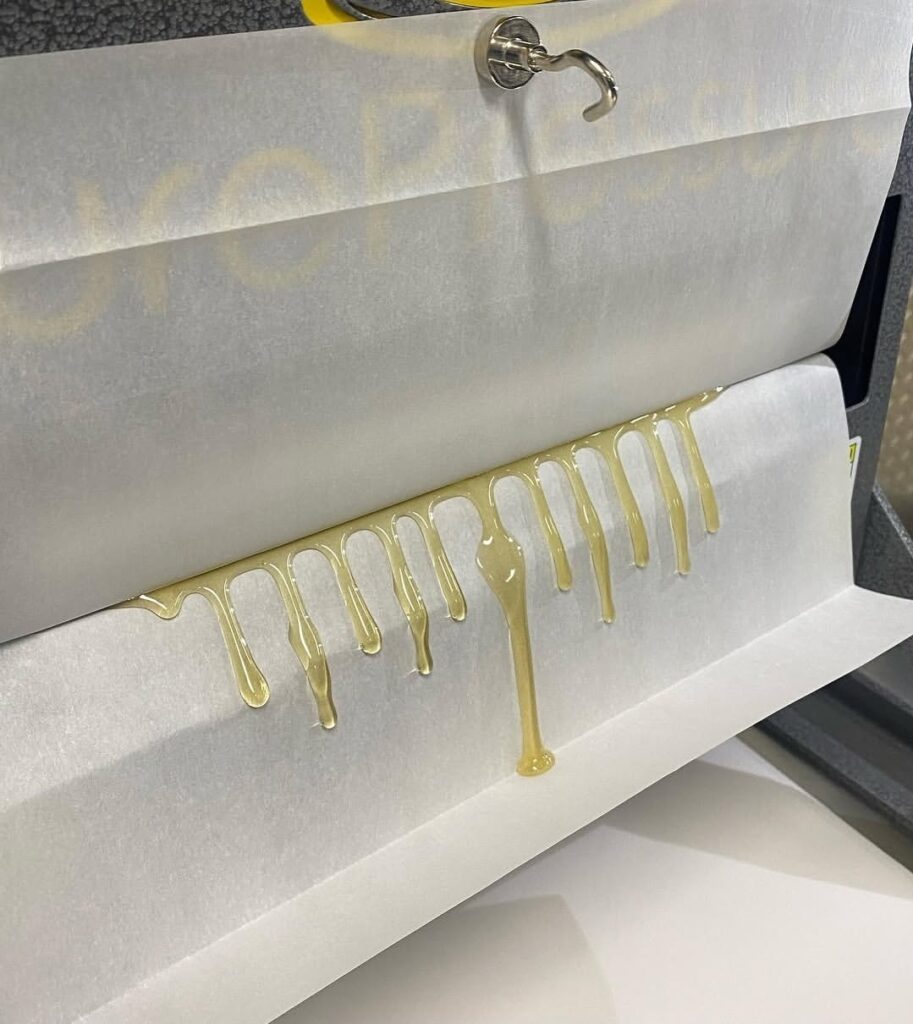
The result looks like thick golden sap. When it’s right, it’s glassy and semi-transparent, smooth and sticky, and oily to the touch. Some fresh press even has a glassy snap, a bit like shatter. What you don’t want is grainy, dry, or cloudy and chalky material when the label says fresh press. That usually means it’s aged, warmed up, or pressed from weak hash.
Fresh press is solventless. That means no chemical solvent touches the plant at any step. Water, ice, heat, and pressure do all the work. That’s why people who care about clean flavor often go straight to it.
Why Solventless Matters to Buyers
Where to buy fresh press rosin often comes down to trust, and solventless is a trust issue. With solvent-based extracts, the finished product has to be purged and tested for leftover solvent. With true solventless rosin, there’s no solvent in the process to begin with. You’re tasting plant material that’s been separated and pressed, not dissolved and stripped.
That doesn’t mean testing doesn’t matter. It does. Pesticides, microbials, and heavy metals can show up in any cannabis product, solventless or not. A good seller tests for all of it and shows you the report. We’ll cover what to look for in a lab report further down.
Strain and Classification
Professor Sift runs small batches from rotating cultivars, so the strain name is printed on each jar and each product listing. Here’s how we classify what you’ll see:
- Indica-leaning: heavier, body-focused effects, often earthy, sweet, or gassy. Good for evenings.
- Hybrid: a balance of head and body effects. The most common style in solventless.
- Sativa-leaning: brighter, more uplifting effects, often citrus, pine, or sweet and sharp.
Classification is a general guide, not a promise. Terpene content, cannabinoid content, and your own tolerance shape the experience more than the label does. If you want to know why a certain jar feels the way it does, look at the terpene section of the lab report.
Lab Data You Can Expect on a Fresh Press Jar
Fresh press rosin typically tests between 70% and 85% THC. Total terpene content on quality fresh press commonly lands somewhere around 4% to 10%, and CBD usually sits under 1% unless the cultivar was bred for it. Total cannabinoids often run above 75% on a strong batch.
Those are category ranges, so use them as a sanity check. If someone sells “fresh press” at 95% THC with almost no terpene data, ask questions. Very high THC with very low terpenes can signal a product that’s been pushed for potency at the expense of flavor, or one that isn’t really fresh press at all. Quality solventless rosin is about the balance: strong, flavorful, and clean.
For every Professor Sift batch, ask to see the certificate of analysis (COA) from an independent lab. A real COA lists the lab name, the batch or lot number, the date, the cannabinoid results, the terpene results, and the safety screens. If a seller can’t show you one, keep looking.
What to Check Before You Buy Anywhere
Where to buy fresh press rosin safely comes down to a short checklist. Use it with any seller, ours included.
- Look at it. Glassy, golden, and semi-translucent is the target for fresh press.
- Ask how it’s stored. Fresh press should be kept cold. A warm shelf is a red flag.
- Ask for the COA. Batch-matched, from an independent lab, with a safety panel.
- Check the harvest and press dates. Fresh means fresh. Older isn’t always bad, but you should know.
- Know the strain. A real product names the cultivar.
- Check the starting material. Fresh frozen flower and bubble hash are the best starting point for flavor.
- Look for a clean smell. It should smell like the plant, not like chemicals.
Where to Buy Fresh Press Rosin Online: What a Good Website Does
Where to buy fresh press rosin online is a common search, and the website you choose says a lot about the seller. Here’s what a trustworthy fresh press rosin website should have:
- Clear product pages with the strain, type, and batch info
- Real lab reports you can open and read
- Honest storage and shipping policies (cold chain, packaging, delivery windows)
- Age verification and legal compliance for your location
- Easy-to-find contact info and real customer support
- No vague claims, no unexplained potency numbers, no “miracle” language
Cannabis laws differ by state and country. Only buy where it’s legal for you, and only from sellers that follow the rules where you live. If a site ships across state lines in a place where that isn’t allowed, that’s a reason to walk away.
How to Read a Certificate of Analysis (COA) Before You Buy
Where to buy fresh press rosin is easier to answer once you can read a lab report, so here’s a plain-language walkthrough. A COA is a one to three page document from a third-party lab. You don’t need a science degree to use it.
Top of the page: the lab name, the sample or batch number, the product type, and the test date. Match the batch number to your jar. If it doesn’t match, the report doesn’t prove anything about what you’re holding.
Cannabinoid panel: this lists THC, THCA, CBD, and others. For fresh press, the big numbers are usually THCA (the raw form) and THC (the active form). Labs often show a “total THC” figure that adds them together after accounting for conversion. Fresh press commonly lands in the 70% to 85% range for total THC. Higher isn’t always better. A 78% jar with rich terpenes often tastes better than a 90% jar with almost none.
Terpene panel: this lists each terpene and its percentage, plus a total. It tells you why the jar smells and tastes the way it does. A solid fresh press often shows a total in the mid single digits or higher, with two or three terpenes leading.
Safety panels: pesticides, microbials (mold, yeast, bacteria), and heavy metals should all say “pass” or show results under the legal limits. Solventless products don’t need a residual solvent test in the same way solvent extracts do, but some labs and states still include one.
Fine print: check for the lab’s accreditation and a signature or lab seal. If the PDF looks edited or has no lab contact info, ask questions.
Fresh Press Rosin vs Other Ways to Buy Solventless
Where to buy fresh press rosin also depends on how you like to shop. You can buy from a licensed dispensary, from a brand’s own store where it’s legal, or at a delivery service in your area. Each route has trade-offs.
At a dispensary, you can see the jar, smell it if the budtender allows, and ask about storage. Ask when it was pressed and whether it’s been kept in a cold case. A cold display case is a good sign for fresh press.
Brand direct, where legal, often means the shortest path from press to you. Fewer hands, less time warm, and clearer answers when you have questions.
Delivery is convenient, but ask how the product is kept cool on the way. Fresh press should not ride around in a hot car all afternoon.
Whichever route you pick, the same rules apply: batch-matched lab data, clear strain info, cold storage, and a seller who answers questions without dodging.
Who Fresh Press Rosin Is For
Fresh press isn’t for everyone, and that’s fine. It’s a great fit if you want the cleanest flavor and the closest taste to the plant, if you already dab or vape concentrates, if you’re comfortable storing it cold, and if you like knowing exactly how your product was made.
It might not be the best pick if you’re brand new to concentrates (the potency is high), if you need something that sits on a warm shelf without changing, or if you prefer a firm, easy-to-scoop texture. In that case, a cold cured badder may suit you better.
If you’re new, start small. A dab about the size of a grain of rice is plenty to learn how a batch hits. You can always take more, but you can’t take less.
Shipping, Packaging, and Cold Chain: What to Expect
Fresh press is heat-sensitive, so how it travels matters as much as how it’s made. A careful seller packs it in an airtight container, protects it from light, and uses insulated packaging or cold packs when the weather calls for it. When your order arrives, don’t leave the box on a porch or in a hot car. Move the jar to the fridge soon after you open the package.
If a jar arrives a little soft or slightly runny, that’s usually temperature, not a defect. Chill it for a bit and it should firm back up. If it arrives hard and cloudy, it may have started curing during transit. That’s not dangerous. It just means the texture has shifted toward a creamier style.
A Quick Word on Price
Fresh press costs more than many concentrates because it takes more steps, more labor, and more care. Fresh frozen flower, ice water washing, low-temp pressing, and cold storage all add up. If a price looks too good to be true for solventless fresh press, it might be pressed from weak hash, aged stock, or not truly solventless. Paying a little more for a seller who can show you the process and the data is usually worth it.
How Is Fresh Press Rosin Made? Step by Step
Where to buy fresh press rosin gets easier when you understand the process, because every step affects what lands in your jar.
Step 1: Harvest and flash freeze. Plants are cut at peak ripeness and frozen quickly, usually within hours. Freezing locks in the light, volatile terpenes that normal drying and curing would lose. 🌿
Step 2: Ice water wash. Frozen flower goes into cold water with ice and is gently agitated. The trichome heads (the tiny resin glands) snap off and sink through filter screens. Cold keeps them brittle and clean.
Step 3: Micron grading. The resin is collected through screens of different sizes. Each size holds a different quality of resin. Only the best, most resin-dense grades move forward for premium rosin.
Step 4: Drying the hash. The wet bubble hash is carefully dried (often freeze-dried) to the right moisture level. Too wet and it won’t press clean. Too dry and flavor and yield suffer.
Step 5: Pressing. The dried hash is loaded into a fine filter bag and pressed between heated plates. Fresh frozen hash is heat-sensitive, so it’s typically pressed at low temperatures with controlled pressure. Hotter presses can push out more oil, but they also cook off terpenes.
Step 6: Collecting the rosin. The oil flows onto parchment as a glossy, sappy sheet. It’s scraped off with a clean tool right away.
Step 7: Jarring and chilling. The rosin goes into an airtight glass jar and straight into cold storage. This is what makes it “fresh press.” No whipping, no curing, no rest period at room temperature.
Step 8: Testing. A sample goes to an independent lab for cannabinoid, terpene, and safety testing before the batch is released.
That’s the whole chain. Every step protects flavor, and a mistake early on can’t be fixed later.
How to Cold Cure Fresh Press Rosin
Where to buy fresh press rosin sometimes leads to a second question: do you want it fresh press or cold cured? Cold curing is a way to take fresh press and turn it into a stable, creamy texture. It’s slow and simple, and it’s where patience pays off.
What cold curing does. When fresh press sits in a cool, sealed jar, the cannabinoids and plant lipids slowly crystallize while the terpenes separate and settle. Over days or weeks, the rosin changes from glossy and translucent to cloudy and creamy. Done well, the result is a badder or budder texture that holds up at room temperature far better than raw fresh press.
How to cold cure fresh press rosin at home:
- Start with a quality jar of fresh press. Weak hash won’t cure into anything great.
- Use a clean glass jar with a tight lid. Glass keeps flavor clean. Don’t fill it to the very top.
- Pick a steady cool spot. Think 50°F to 60°F (10°C to 16°C). A wine fridge or a cool, dark room works. Avoid anywhere that swings hot and cold.
- Leave it alone for the first few days. Don’t open it. Every opening lets air in.
- Watch for changes. Over a week or two, you’ll see the texture cloud up. Terpenes may pool on top.
- Check on it sparingly. Some batches take about a week. Others take three or four. Every cultivar is different.
- Decide on whipping. Some people gently fold the terpenes back in for a uniform badder. Others leave it alone and enjoy the natural texture. Both are fine. Whip lightly, and don’t use high heat.
- Store it cool afterward. Even cured rosin does best away from heat and light.
Cold cure vs fresh press. Fresh press is glassy and bright, with the most immediate flavor. Cold cure is creamy and rounded, easier to scoop, and more shelf-stable. If you want maximum clarity and a “straight off the press” experience, buy fresh press. If you want something easier to handle and store, cold cure is worth a look.
One warning: cold curing is not a rescue method. If the starting hash was poor, the cure won’t fix it. And curing too long or too warm can dry the rosin out or dull the flavor. When in doubt, go slow and keep it cool.
Product Specifications Table
| Attribute | Details |
|---|---|
| Brand | Professor Sift |
| Product Type | Fresh Press Hash Rosin (Solventless) |
| Extraction Method | Ice water hash, heat and pressure press, no solvents |
| Starting Material | Fresh frozen cannabis flower |
| Strain / Cultivar | Small-batch rotating cultivars, named on each jar |
| Classification | Indica-leaning, hybrid, and sativa-leaning options |
| Typical THC Range (fresh press category) | 70% to 85% |
| Typical Total Terpene Range | Around 4% to 10% |
| Typical CBD | Under 1% |
| Texture | Glassy, golden, sappy to snappable |
| Color | Pale gold to amber |
| Residual Solvents | None used in process (solventless) |
| Safety Testing | Pesticides, microbials, heavy metals via independent lab |
| Packaging | Airtight glass or silicone jar |
| Storage | Cold, dark, airtight |
| Best Use | Low-temp dabs, bowl toppers, joints |
Flavor
Where to buy fresh press rosin for the best flavor? Start with fresh frozen, solventless, and cold-stored. That combination keeps the bright top-note terpenes intact. Expect a clean, plant-true taste with no chemical aftertaste. Depending on the cultivar, flavor can run from citrus and pine to sweet berry, gas, or soft earth and spice. Fresh press tends to taste vivid and sharp, with layers that show up early and stay through the exhale. 🍋
Aroma
Open a jar and the smell hits first. Fresh press rosin smells close to the living plant, often green, bright, and a little sticky-sweet, with the dominant terpenes of the cultivar leading the way. 👃 If it smells flat, stale, or sharp like chemicals, something went wrong in storage or production. A good jar smells alive.
Inhale & Exhale Experience
Inhale: Smooth and flavorful. A low-temperature dab delivers the cultivar’s lead notes cleanly with no harsh bite.
Mid-hold: The terpenes open up. You get citrus brightness, pepper warmth, or herbal depth, depending on the batch.
Exhale: A rounded finish that carries the same character through. Good fresh press doesn’t taste burnt or generic on the way out.
Details for Fresh Press Hash Rosin for Sale
Professor Sift fresh press hash rosin is sold in small batches. Each listing names the strain, classification, and batch date, and each jar is packed to stay cold in transit. We keep fresh press as fresh press: no extra whipping, no rush cure. If you’d rather have a stable, creamy product, ask about cold cure options from the same hash. Orders are for adults of legal age only, in places where purchase is allowed.
Hardware Details: What to Use With Fresh Press Rosin
- Dab rig with quartz or titanium banger: the classic way to taste fresh press. Keep temps low, roughly 450°F to 550°F at the surface.
- Concentrate vaporizer or e-nail: gives steady, controlled heat for flavor-first sessions.
- Rosin-friendly vape devices: built for solventless material and lower temperatures.
- Bowl or joint: add a small piece on top of flower. Easy, no extra gear.
- Tools: use a non-stick titanium or ceramic dab tool. Fresh press sticks to plain metal.
Features
- 🧊 True solventless extraction, no butane or CO2
- 🌿 Fresh frozen starting material for a fuller terpene range
- 🔬 Independent lab testing for potency and safety
- 🥄 Fresh press texture, jarred straight off the press
- ❄️ Cold-chain handling from press to packaging
- 🚫 No additives, no fillers, no flavoring
- 📦 Airtight packaging that protects flavor
Rosin Quality Details
Quality in fresh press starts with the hash. We use bubble hash from fresh frozen flower and only press the cleaner, resin-rich grades. Pressing is done low and slow so the light terpenes stay in the oil. After pressing, the rosin is checked by eye for clarity and texture, then jarred and chilled right away.
What a quality jar looks like: translucent golden sap, smooth and slightly sticky, no grit, no dry patches, no foggy haze (unless it’s a cured batch on purpose). What it smells like: the plant. What it should never have: chemical odor, burnt smell, or visible debris.
Testing covers cannabinoid potency, terpene content, and safety screens for pesticides, microbials, and heavy metals. Ask for the batch COA and compare the batch number on the report to the one on your jar.
Terpene Profile
📊 WORD INFOGRAPHIC: Common Fresh Press Terpenes
WHAT YOU'LL COMMONLY SEE ON A FRESH PRESS COA
--------------------------------------------------
🍋  Limonene ......... Citrus, bright, uplifted
🌲  Pinene ........... Pine, crisp, fresh
🌿  Myrcene .......... Earthy, herbal, relaxing
🌶️  Caryophyllene .... Pepper, spice, warm
🌸  Linalool ......... Floral, soft, calming
🌳  Humulene ......... Woody, hop-like
--------------------------------------------------
Lead terpenes change by cultivar. Total terpenes
on quality fresh press often run about 4% to 10%.
Fresh frozen starting material keeps more of the volatile, lighter terpenes like limonene and pinene, which normal drying would reduce. That’s a big reason fresh press tastes brighter than rosin pressed from cured flower. Which terpenes lead depends on the strain, so check the terpene panel on the lab report for the exact order and amounts.
Product Highlights
✅ Solventless hash rosin, ice water hash only ✅ Fresh press texture, glassy and golden ✅ Typical 70% to 85% THC for the category ✅ Terpene-rich, fresh frozen starting material ✅ Independent lab testing on every batch ✅ Cold-chain care from press to doorstep ✅ No additives, no fillers, no solvents
Why Customers Choose Fresh Press Rosin From Professor Sift
Where to buy fresh press rosin ends up being about trust. Here’s why buyers pick Professor Sift:
Flavor first. Fresh frozen starting material and low-temp pressing keep the plant’s real taste.
Clear information. Strain, classification, and batch details are listed up front, and we explain what the numbers mean.
Clean process. Solventless means nothing chemical is used to pull the oil out.
Cold storage. Fresh press needs it, and we treat it as a requirement, not an afterthought.
Choices. If you want glassy fresh press or a stable cold cured texture, you can ask for what suits you.
Storage Instructions
Fresh press rosin wants to stay cold, dark, and sealed. Keep the jar in the fridge for short and mid-term storage. For long-term storage, a freezer can work, but let the sealed jar come up to room temperature before opening to avoid moisture. Keep it away from heat, sunlight, and car interiors. Don’t open and close the jar over and over. Take what you need quickly and reseal. If it’s warmed up at any point, the glassy texture will slowly turn cloudy and creamy. That’s natural curing, not spoilage. ❄️
Usage Tips
- Start low. Fresh press is strong. A small dab goes a long way.
- Keep dab temps low. Around 450°F to 550°F preserves flavor.
- Chill before scooping. A few minutes in the fridge makes sticky sap easier to portion.
- Use the right tool. Titanium or ceramic, non-stick.
- Bowl topper: press a small piece onto packed flower.
- Joint: layer a thin line inside, away from the edges, so it burns evenly.
- Wait between hits. Concentrates hit fast, and effects build.
Comparison vs Similar Concentrates
| Type | Texture | Made With | Best For |
|---|---|---|---|
| Fresh Press Rosin | Glassy, golden sap | Ice water hash, heat, pressure | Max clarity and bright flavor |
| Cold Cure Rosin | Creamy badder | Fresh press, cured cool and sealed | Stability and rounded flavor |
| Live Rosin | Varies | Fresh frozen hash, pressed | Terpene-forward solventless fans |
| Live Resin | Sap, sauce, or crumble | Fresh frozen flower, solvent | Strong flavor, solvent-based option |
| Cured Rosin | Varies, often drier | Dried and cured flower | Budget-friendly solventless |
| Dry Sift Rosin | Varies | Pressed dry sift | Solventless without water |
Frequently Asked Questions
1. Where to buy fresh press rosin safely? Buy from a licensed seller where it’s legal in your area. Look for batch-matched COAs, clear strain info, cold storage practices, and real contact details.
2. What does a good fresh press rosin website include? Product pages with strain and batch details, accessible lab reports, clear shipping and storage policies, age verification, and real customer support.
3. How is fresh press rosin made? Fresh frozen flower is washed in ice water, the resin is graded and dried, then the hash is pressed with low heat. The rosin is jarred and chilled right away.
4. How do I cold cure fresh press rosin? Keep it in a sealed glass jar at roughly 50°F to 60°F for one to four weeks, opening it as little as possible. It turns cloudy and creamy as it cures.
5. What THC percentage should fresh press rosin have? It typically tests between 70% and 85% THC. Check the batch COA for the exact number.
6. Why does my fresh press rosin look cloudy? It’s naturally curing. Warmth and time turn glossy sap into a creamier texture. It’s normal, not spoilage.
7. Does fresh press rosin need to be refrigerated? Yes, ideally. Cold storage keeps it glassy and protects terpenes.
8. Is fresh press stronger than cold cure? Not meaningfully. Potency comes from the starting hash, not the cure. The difference is texture and flavor feel.
9. Is fresh press rosin solventless? Yes. It uses only ice, water, heat, and pressure. No chemical solvents.
10. Can I smoke fresh press without a dab rig? Yes. Put a small piece on top of a bowl or inside a joint.